Download Center||
Rattan Guide

How to Tell Real Rattan from Synthetic Rattan in 5 Steps

September 18, 20265 Minutes
How to Tell Real Rattan from Synthetic Rattan in 5 Steps
Step 1: Look for Natural Variation

Start by examining the strands across several parts of the furniture.

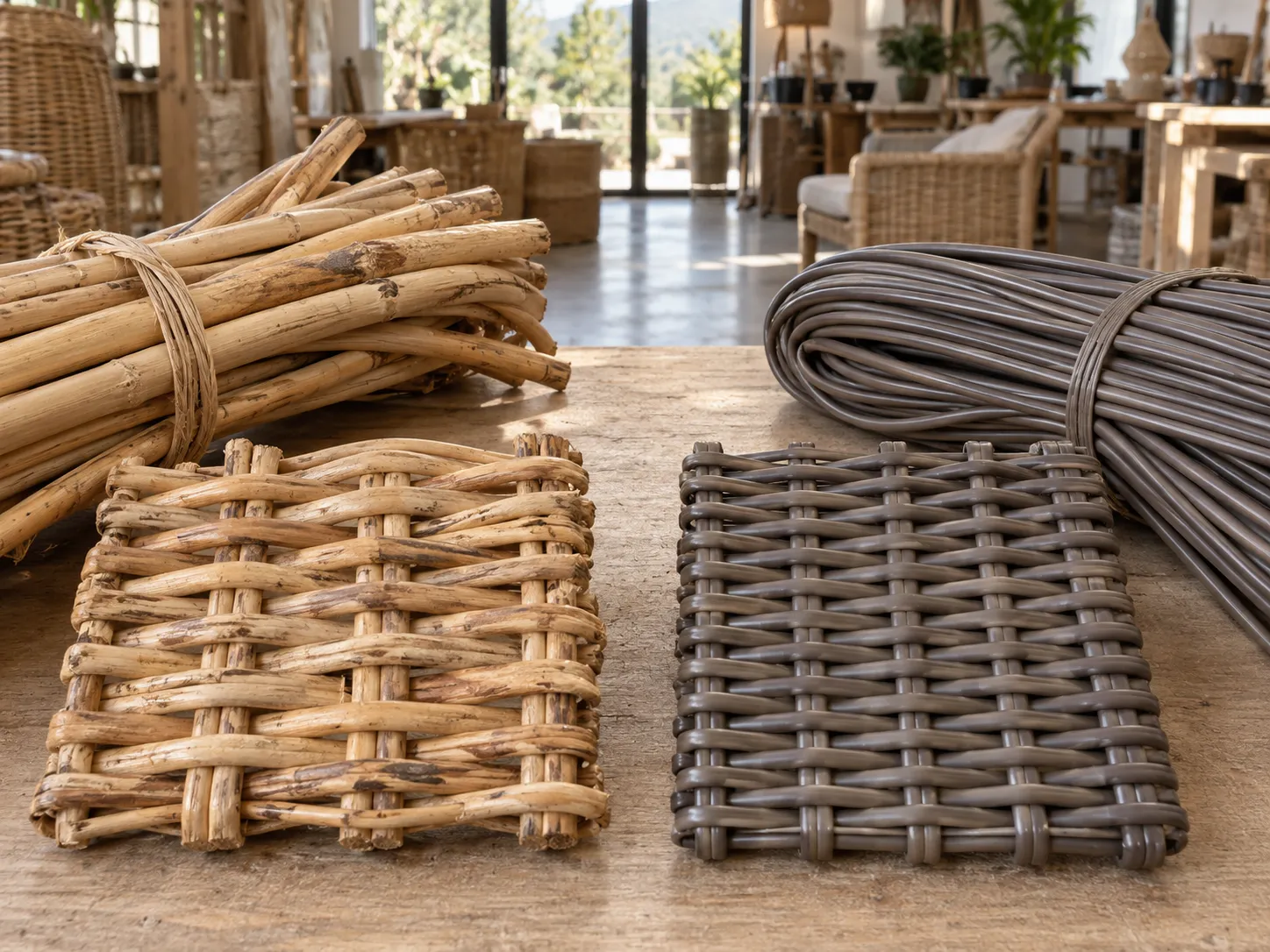
Natural rattan usually shows subtle differences in color, diameter, fiber structure, and surface appearance. You may also notice growth marks, nodes, or small irregularities because the material comes from a natural climbing palm.

Synthetic rattan tends to be more consistent. Polymer strands are manufactured to specific dimensions, so their thickness, color, and surface pattern are usually more uniform.

A highly consistent weave can therefore indicate synthetic rattan. Keep in mind that premium synthetic fibers may intentionally use mixed tones and textured surfaces to imitate natural cane.

Step 2: Feel the Surface

Touch can provide another useful clue.

Natural rattan generally feels slightly fibrous or textured, even after finishing. Its plant-based structure often leaves small variations that can be felt along the surface.

Synthetic PE or HDPE rattan is usually smoother because the strands are produced from polymer resin. Some manufacturers add embossing or texture to create a more natural appearance, so premium synthetic rattan may feel less obviously plastic.

Heat can offer another clue. Synthetic strands may become noticeably warmer after prolonged exposure to direct sunlight, whereas natural rattan responds differently because of its organic fiber structure.

Texture should therefore be considered together with other characteristics.

Step 3: Check the Sheen

Lighting can make the difference between natural and synthetic materials easier to see.

Natural rattan generally has a softer, more matte appearance. Its irregular surface diffuses light rather than reflecting it evenly.

Synthetic rattan may have a more consistent sheen, particularly under bright or directional lighting. Some polymer fibers produce a subtle reflective appearance that can make them easier to identify.

Modern synthetic rattan can also be manufactured with matte finishes, so shine alone is not enough to confirm the material.

Step 4: Try a Tap and Flex Test

Apply moderate pressure to the woven surface and observe how the strands respond.

Natural rattan has some natural flexibility, especially in woven areas. When lightly tapped, natural cane may also produce a lighter or more wood-like sound.

Synthetic strands often create a more muted sound, particularly when woven over an aluminum or steel frame.

Furniture construction affects both sound and flexibility, so this test works best on exposed woven areas rather than heavily cushioned sections.

Excessive movement should not automatically be interpreted as natural rattan. It may simply indicate loose weaving or insufficient structural support.

Step 5: Inspect the Joints and Underside

The less-visible parts of the furniture often provide the strongest clues.

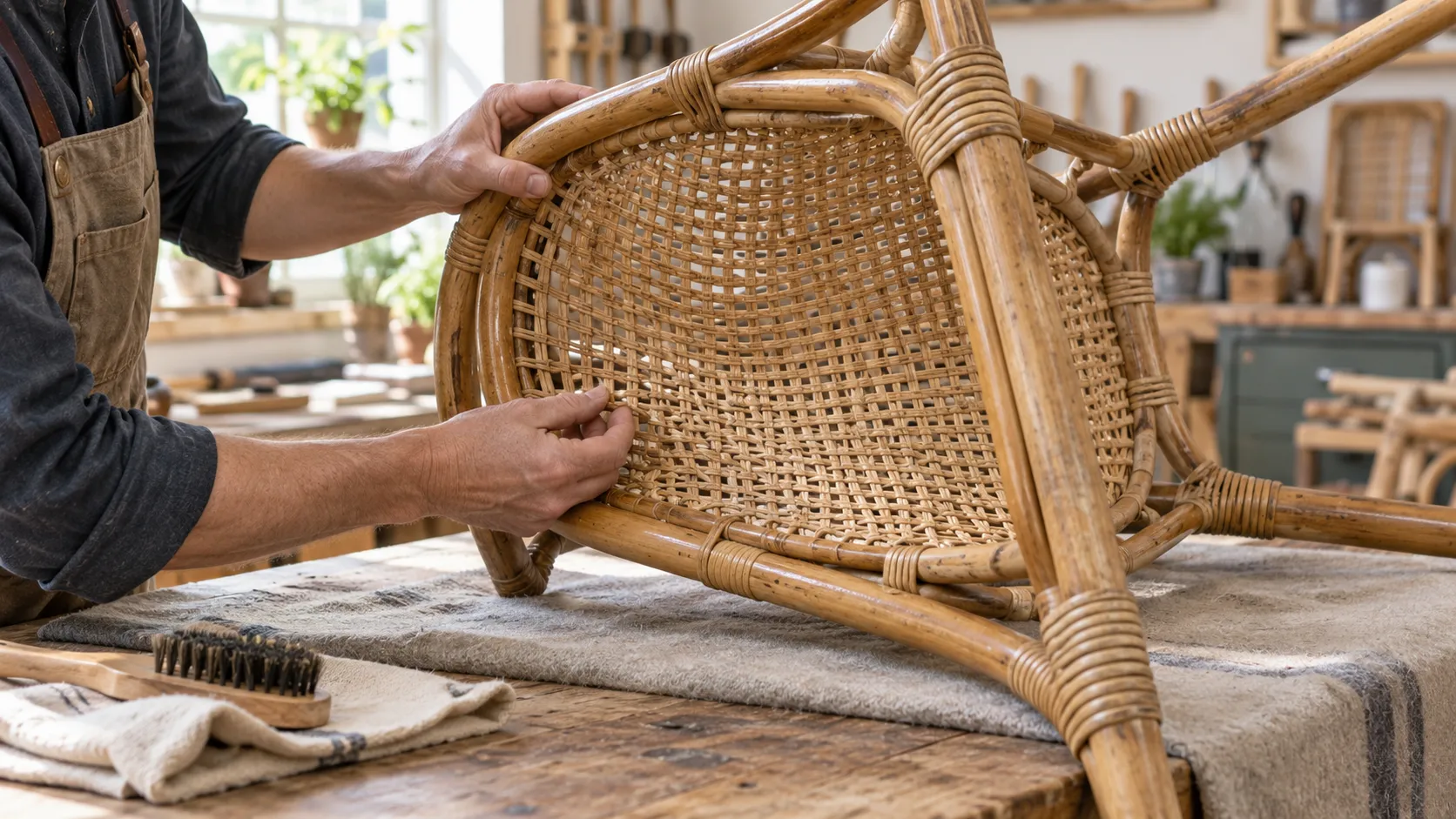
Traditional natural rattan furniture may use strips of cane peel or similar natural material to wrap and secure joints.

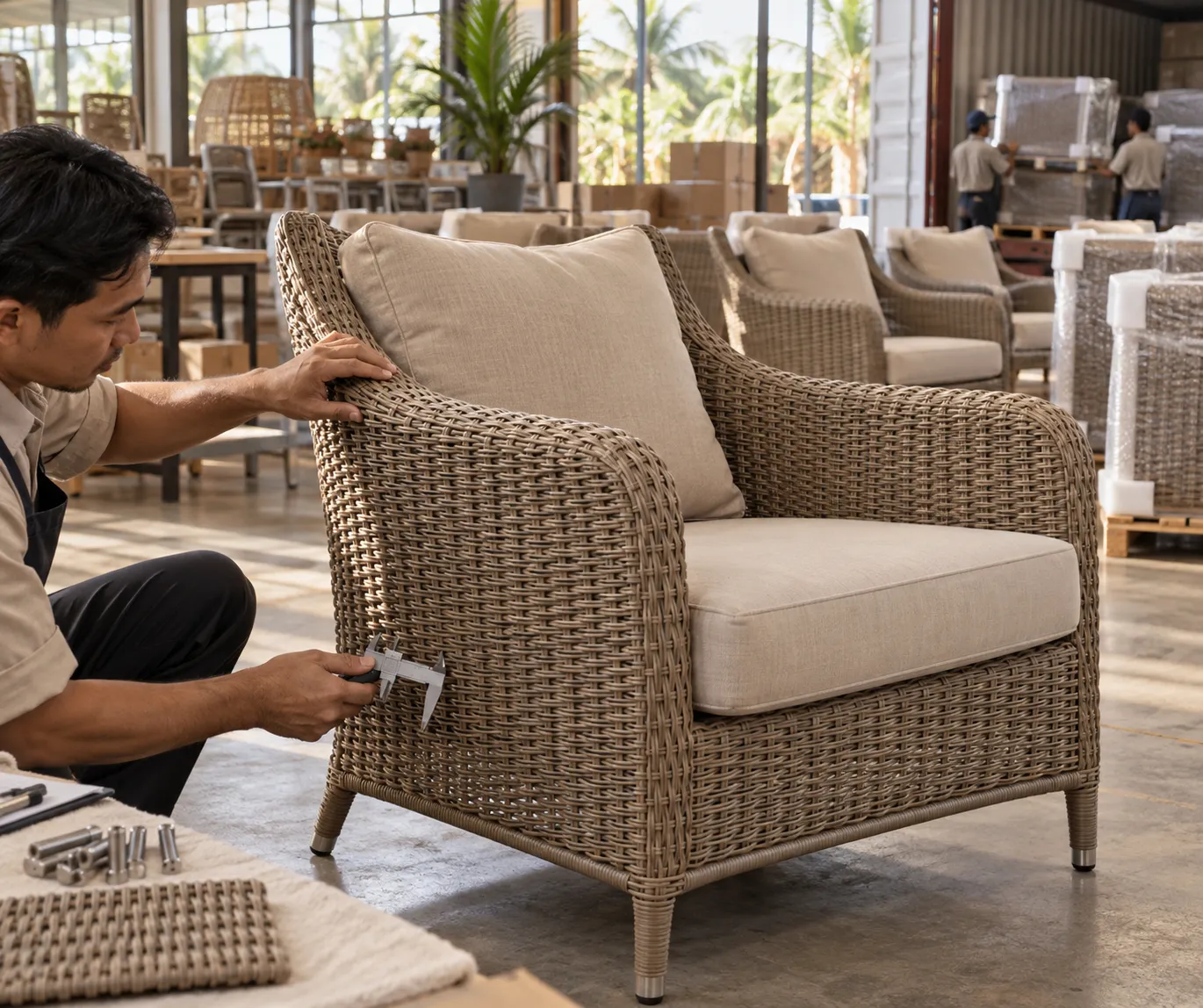
Synthetic rattan furniture is generally woven around an aluminum or steel frame. Connections may use welding, screws, staples, or concealed fasteners beneath the weave.

Check the underside of chairs, tables, sofas, and loungers rather than judging the material only from the finished exterior.

Scent can provide another small clue. Natural rattan may retain a mild dry, woody, or plant-like smell, while synthetic rattan is generally neutral or may have a slight polymer smell when new.

Conclusion

The most reliable way to distinguish natural from synthetic rattan is to combine several checks rather than relying on one characteristic. Look closely at strand variation, surface texture, sheen, joint construction, and the underside of the furniture. A quick tap or flex test can provide additional clues.

For wholesale procurement, visual inspection should also be supported by supplier specifications. Knowing whether a product uses natural rattan, PE rattan, HDPE, PVC, or another synthetic material is important because each has different expectations for outdoor use, durability, maintenance, and commercial applications.

For businesses sourcing rattan furniture from Indonesia, Rattan Tradeasia supports importers, distributors, retailers, hospitality projects, and other B2B buyers with reliable rattan sourcing solutions. Whether you require natural rattan furniture, synthetic outdoor collections, or products for a specific commercial project, Rattan Tradeasia can help you identify suitable products and coordinate your sourcing requirements.

 

Stay Inspired

Subcribe to our insight newsletter and be the first to receive the latest article and news updates form Tradeasia

Need help or product quote?👋 Chat with Assistant!